PART SEVEN: Final Thoughts
The Texas Wildfires of 2025

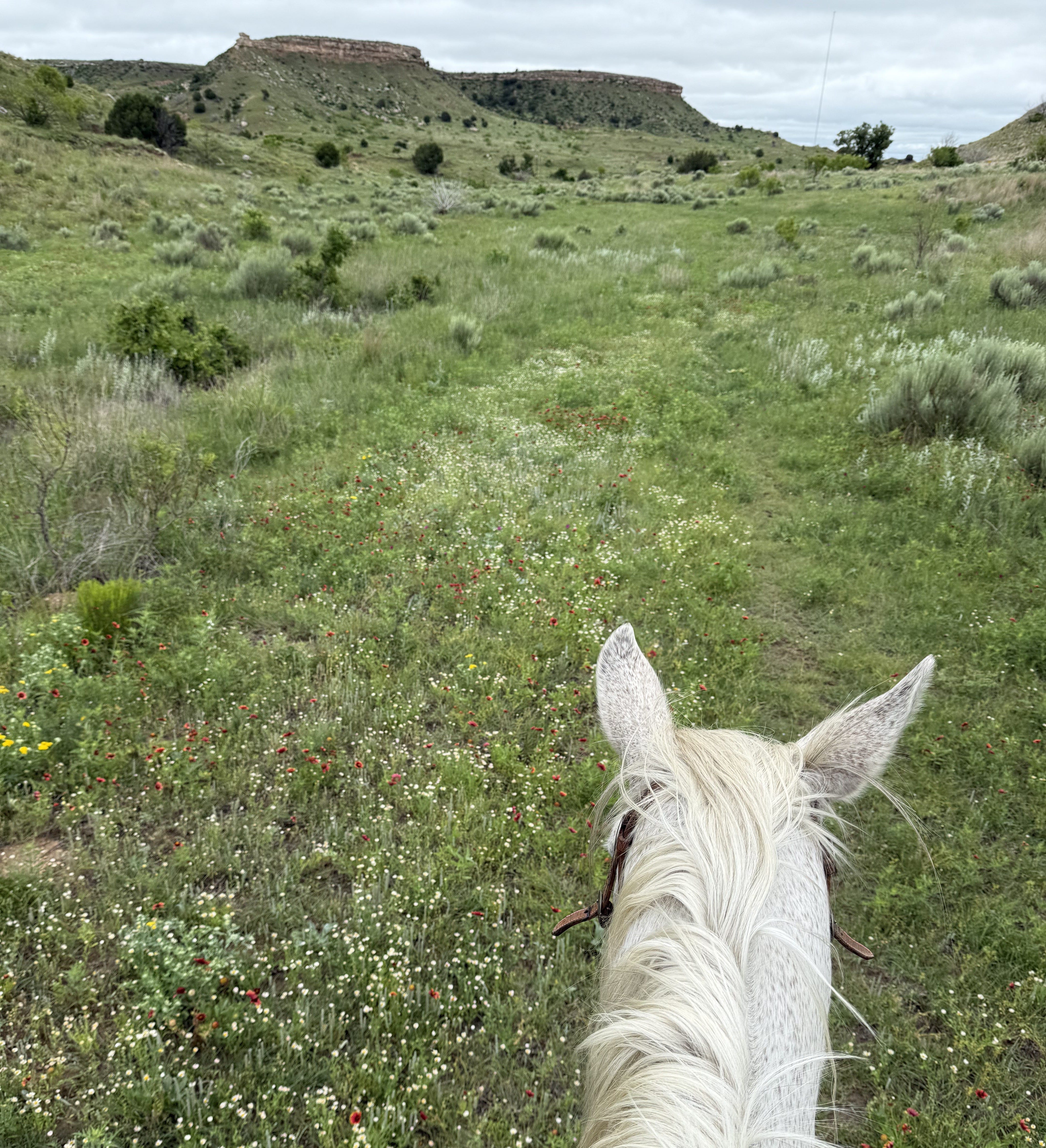
Editor’s Note: As we bring to a close this series on the Texas Wildfires of 2025, we can report that we made it through the month of March without any major fire events. We’re not out of it yet. Conditions are still dry and any day could bring high winds. We don’t forget those impacted by the fires in Oklahoma, southern Kansas and Nebraska.
In the Windmill Fire of 2025 fire, we lost only two hundred acres of pasture, with no damage to livestock or structures, and our house didn’t burn down, as it did in 2017.
To most people in Texas, it wasn’t a major event. In fact, I had trouble finding any news about it. One small story from an Amarillo TV station placed the acres burned around 25,000, with the loss of only one structure.
If that is correct, it didn’t amount to much compared to other fires we had experienced:
· Smokehouse Creek Fire (2024)—over a million acres
· Amarillo Complex Fire (2006)—900,000 acres.
· Perryton Fire (2017)—318,000 acres.
But there were qualities about the 2025 fire that gave it a special place in the memory of my family, the most obvious being that, over a twenty-year period, this was the fourth time we’d been in the path of a large, destructive wildfire. We’d had a ringside seat to all three of the fires listed above, which were the first, second, and fourth-largest fires in Texas history.
It raised the question: “Why are we seeing these enormous, destructive wildfires on such a regular basis?” Some observers are convinced that it’s a result of manmade climate change. Others ascribe it to natural climate variation, the increase in population, and our insatiable appetite for electricity.
I am an amateur, caught in the middle, and trying to keep an open mind. I hope that science will eventually provide answers that are not tainted by dogma, politics, or self-interest.
But one thing is certain. The Canadian River valley in Roberts, Hutchinson, and Hemphill Counties is a magnet for large grass fires. It’s a big, empty expanse of tall grass with few roads and no plowed fields to stop a fire. Deep canyons and rough terrain present firefighters with difficult logistical problems, especially at night.
On a day when the wind comes screaming out of the west, the valley becomes an east-west highway for fires. All it takes is a spark from a downed electric line, a welder, or a cigarette.
One factor about the 2025 fire that made it memorable was that it lingered. For six days, we were either fighting fires or running from them. On Sunday, March 16, we had fires smoldering or burning in all four directions. It wouldn’t leave us alone. Every change in wind direction brought it back to life and our home in Pickett Canyon was never out of danger.
Over the six-day period, we observed or met at least a hundred responders. Some belonged to local fire departments. Others came from far-away places: East Texas, Oregon, California, and Montana. The big tanker planes flew out of Abilene and Childress. Smaller crop-duster planes came from Perryton and Dumas.
We saw them in action but never had a clear sense of who was directing this ballet of people, firetrucks, dozers, graders, water trucks, and aircraft. The Texas Forest Service had personnel and equipment on the ground, and there might have been federal agencies involved as well.
At some point during the week, Mark asked, “Who’s paying for all of this?” It was an obvious question. Just the cost of fuel alone would be substantial, never mind the cost of all that equipment and labor.
The Erickson family will always be grateful to whoever brought this army together, gave it directions, and paid the bills. And we won’t forget to thank the Lord for the rain. If we hadn’t gotten that little shower right over the fire zone on Friday, there’s no telling how far it might have gone.
It could have turned into the kind of disaster we saw in the Smokehouse Creek Fire of 2024, the biggest fire in Texas recorded history. All the ingredients were there.
Glad you made it through safely.
Years ago, I knew a woman who lost everything to fire 3 times in her life. Fire is one of my biggest fears.
I can’t imagine the heartache involved